Disclaimer
Green text is to make conclusions and analysis easy to decipher when it is under long pieces of source text. Not all of my own work is in green text just the conclusions of sources that it may blend in with such as stories or paragraphs of sourced text.
An analysis of myself and what I want my final project to be for me
Strengths : painting and composition
Career ambition : working in East Asian cinema
Current project interests : Korean/Japanese folklore with a horror twist
Want to learn over the next few months : learn to break down conventional story structures/ tell abstract stories
Reflection on journal writing
I did a free writing task where I laid out my career aspirations, living aspirations and how there is some conflict in those two areas in terms of I want to live in Japan and make it my home but I want to work on Korean cinema specifically. In doing this I came up with potential alternatives that linked external hobbies to my film career that would allow for a big career in Japan. By reflecting upon this writing and analyzing why I may be making the choices I was making I was able to separate myself from the issues, see them objectively and settle some of the qualms and stress that came with the conflict of interest.
Inspiration and Idea exploration
Animation
Jack Stauber
Jack Stauber has a very unique abstract style, from voice over effects to his mixing of animation, stop motion and filming. Over the past few months I have been encouraged by my tutors to explore abstract techniques and story telling to expand my abilities and explore creating my own stories.
Videos:
Styles: Vaporwave, retro
I find the hand drawn animation style very characteristic and unique, making it my preference as of right now in terms of aesthetics.
Studio Ghibli
Studio Ghibli are a Japanese animation company that have a globally recognised art and plot style. Spirited away is my main inspiration for set and character design. Below is a visual storyboard of similar shots and character design I had in my mind for an animated short film set in a temple garden.

Research into animation methods
I watched these three videos to see the logistics of hand drawn animations, the time they take and what different methods I can employ to achieve different aesthetics. I decided I didn’t want to make a film that looked like the first video. It’s also quite static and one of the things I like most about Ghibli’s animation is the flow and movement, which I feel adds greatly to the weight of the scenery and atmosphere. The other two are information videos on digital hand drawn animation which I used in my platform testing.
Testing software – Adobe illustrator and animator
I used the following tutorial to familiarise myself with how to use the shape tools that I could use to make a character. Although it is not hand drawn I feel it would be foolish to not explore a professional software that is readily available to me.
The objects made in illustrator:


Unfortunately the exported footage corrupted but the video had each object appear in one second intervals to create a house setting. Although i don’t think I will use this due to the art style I am glad that I familiarised myself with both of the softwares for potential usage going forward.
Testing software – Plastic Animation Paper 4.0
Concluding animation
After researching into the several avenues of animation I have decided not to pursue the animation route. It wouldn’t be very practical for me to go down the hand drawn route as I would need to use my drawing tablet, which needs to be installed on each computer. This would limit me to one computer at a time which would be very inefficient and would also require me to have both animating software and artisanal drawing software to colour each frame. I also would not like to use the pre-made graphics in Adobe illustrator and animation software as I feel it looks childish, commercial and cold as opposed to the more unique and warm feeling of hand drawn animation.
Research + sources
East Asian stories
I want to explore the possibility of finding a pre-existing story from East Asian cultures and interpreting it into the thriller genre I want to work in. Below are stories I have read in my quest to find one that maybe inspired me into moulding it to my specifications. I included two cultures: Korean and Chinese. Korean because it is the industry in which I want to work in and is also the original language my two biggest inspirations (Oldboy and Tale of two sisters) were made in.
Folk tales
Korean
Below are two of the stories I read in the search for inspiration that stood out to me.
XIV
THE OLD MAN WHO BECAME A FISH
Some years ago a noted official became the magistrate of Ko-song County. On a certain day a guest called on him to pay his respects, and when noon came the magistrate had a table of food prepared for him, on which was a dish of skate soup. When the guest saw the soup he twisted his features and refused it, saying, “To-day I am fasting from meat, and so beg to be excused.” His face grew very pale, and tears flowed from his eyes. The magistrate thought this behaviour strange, and asked him two or three times the meaning of it. When he could no longer withhold a reply, he went into all the particulars and told him the story.
“Your humble servant,” he said, “has in his life met with much unheard-of and unhappy experience, which he has never told to a living soul, but now that your Excellency asks it of me, I cannot refrain from telling. Your servant’s father was a very old man, nearly a hundred, when one day he was taken down with a high fever, in which his body was like a fiery furnace. Seeing the danger he was in, his [79]children gathered about weeping, thinking that the time of his departure had surely come. But he lived, and a few days later said to us, ‘I am burdened with so great a heat in this sickness that I am not able to endure it longer. I would like to go out to the bank of the river that runs before the house and see the water flowing by, and be refreshed by it. Do not disobey me now, but carry me out at once to the water’s edge.’
“We remonstrated with him and begged him not to do so, but he grew very angry, and said, ‘If you do not as I command, you will be the death of me’; and so, seeing that there was no help for it, we bore him out and placed him on the bank of the river. He, seeing the water, was greatly delighted, and said, ‘The clear flowing water cures my sickness.’ A moment later he said further, ‘I’d like to be quite alone and rid of you all for a little. Go away into the wood and wait till I tell you to come.’
“We again remonstrated about this, but he grew furiously angry, so that we were helpless. We feared that if we insisted, his sickness would grow worse, and so we were compelled to yield. We went a short distance away and then turned to look, when suddenly the old father was gone from the place where he had been seated. We hurried back to see what had happened. My father had taken [80]off his clothes and plunged into the water, which was muddied. His body was already half metamorphosed into a skate. We saw its transformation in terror, and did not dare to go near him, when all at once it became changed into a great flatfish, that swam and plunged and disported itself in the water with intense delight. He looked back at us as though he could hardly bear to go, but a moment later he was off, entered the deep sea, and did not again appear.
“On the edge of the stream where he had changed his form we found his finger-nails and a tooth. These we buried, and to-day as a family we all abstain from skate fish, and when we see the neighbours frying or eating it we are overcome with disgust and horror.”
This story peaked my interest for two reasons;
- Supernatural qualities – The idea of re-incarnation and the afterlife are potential focal points for a good story. A character faced with their moral dilemmas in the afterlife
- Animals – Animals are good for symbolism that is living and dynamic.
The story of Hungbu and Nolbu is a famous Korean folk tale that reflects Confucianism, an ancient Chinese philosophy that stresses filial duty and respect to elders. The younger brother, who is a good person, is rewarded with magical riches given to him by a swallow that he cared for when its wing was broken. When the older brother tries to duplicate his younger brother’s good fortune, the result is the opposite. Even though the older brother is a bad person, the younger brother forgives his transgressions and invites him into his home, where the older brother changes his ways. [picture book, ages 5 and up]
The mention of Confucianisms influence on the moral of the story is something I definitely want to look further into as i think it could be extremely imperitive for me to get my structure to feel authentic.
Chinese
Before the lion dance, officials take part in a dotting of the eyes ceremony (known in Chinese as the Hoi Gong ceremony).
They use a calligraphy brush to paint red ink on a new lion’s costume.
The lion starts off with its eyes and mouth firmly closed. First the mirror on lion’s forehead is dotted to awaken its spirit and give it life.
Next the eyes are dotted to give the lion sight, and this is followed by dots on the nose, tongue, ears, horn, back of head, spine and the tail.
A red ribbon is tied on the top of the lion’s head. This is a symbol of courage and honour and shows that the lion is tamed. It is also a reminder to the lion to do only good deeds.
My interest in this story stems from seeing it performed for New Year; my reflections on which can be found in my production log. The main thing I took away from this story was the symbolism of the red ink. One of my potential stories involves someone being awoken in an alternate reality. I think the symbolism of red combined with the awakening could be a cultural reference that enhances my films authenticity and depth.
The above story of the flower and the princess is something I have known about for many years and wanted to interpret into film format. Unfortunately I don’t think it will suit the path I’m going down in terms of genre and theme but i still think it adds to my historical cultural knowledge and research in a beneficial way; in terms of allowing myself to explore pathways and not just getting tunnel vision over one story too soon, which is one of my past creative struggles.
Story structure and cultures relationship
I covered this topic in a research essay because it is something that interests me greatly and is a topic that I want to carry over into this project to strengthen my storytelling skills. Below is a quote from an academic journal I discovered whilst writing my essay which covers the effect the homogeneous religion of a country has on the story structures that come from said country. This is important to my project and career because it will help me achieve a more authentic story line.
‘ Wee spends a chapter on each pair of films but begins the book with a background comparison of the cultural and societal influences on Japanese and Western horror films. She specifically addresses the impact on the genre of Buddhism, Shintoism, and Confucianism in Japan versus Judeo-Christian beliefs in the United States. Wee differentiates the duality and coexistence of good and evil in Japanese versus American horror film. American horror films use the Judeo-Christian belief of good versus evil. In Japan, good and evil can and should coexist, but in balance (yin/yang). Therefore, in a Japanese horror film, there is an effort to restore balance between good and evil. American films, based on the ideology of good versus evil, depict good trying to defeat evil. This difference can cause a Japanese horror film to leave American audiences confused and wishing for a less abstract ending. American remakes often address this issue by supplying the more concrete ending their audiences crave.
Wee also examines the history of Japanese horror films in the context of Kabuki theater and its “tradition of exploring and expressing notions of terror and the horrific” (31). More specifically, she discusses kaidan, which is a supernatural story usually involving a female ghost that seeks revenge. Wee states that in Japanese culture (premodern), the ie system is based on the idea of community needs over individual needs. The natural (personal) inclination, or ninjo, is secondary to the communal obligations, or giri. To pursue ninjo over the giri is “wrong” and unacceptable in society. “Right” is acting as per one’s role and responsibility in society. Wee demonstrates how this is expressed in many Japanese horror films, where a vengeful ghost is not evil in the traditional Western sense but is trying to restore balance. For example, if a child dies because of the neglect of a parent, then the parent has not lived up to his or her communal obligation. Balance is disrupted, so the child’s ghost haunts the living until balance is restored. ‘
Confucianism
Through research for my foreign film research journal I learn’t that a lot of foreign story structures come from the homogenous religion of the country and its teachings. The ethical philosophy systems like confucianism and Buddhism are the most dominant in the countries I’m looking at to base my film around and are therefore where I need to look for my story structure.
‘ Confucian teaching rests on three essential values: Filial piety, humaneness, and ritual. The Confucian value system may be likened in some ways to a tripod, which is one of the great vessels of the Shang and Zhou Period and a motif that reoccurs in later Chinese arts.
In more general terms, filial piety means to be good to one’s parents; to take care of one’s parents; to engage in good conduct not just towards parents but also outside the home so as to bring a good name to one’s parents and ancestors; to show love, respect and support; display courtesy; to ensure male heirs, uphold fraternity among brothers; wisely advise one’s parents, including dissuading them from moral unrighteousness; display sorrow for their sickness and death; to bury them and carry out sacrifices after their death. ‘
The tripod metaphor makes me see the number 3 as a potential piece of symbolism for faith and the values the main character believes in. Particularly the male heir part mentioned. This is a virtue that would be key in the family dynamic I think i’m going to give my main character.
‘ It stresses hierarchy, social harmony, group orientation and respect for elders – all aspects of Chinese, Japanese and Korean culture that are still very much alive.’
‘ In Confucianism, respect towards elders was originally between father and son, but it has been extended to describe other relationships too, such as the relationship between a ruler and a subject, a husband and a wife, elder and younger brother, and between friends. ‘
This preference to sons and males in general may be a good provider for psychological weight to certain events for the main character. i.e. if the main characters son and daughter were hurt the emotional turmoil and how it differs between the two children could add layers to my thriller.
Buddhism
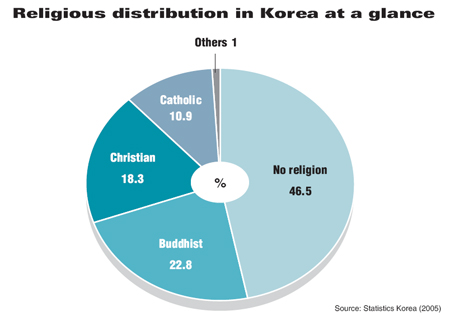
Below is a pie chart that shows that Buddhism is the most practised religion in Korea. This is important as now I know what values will be reflected most in Korean culture from a religious stand point to go alongside the philosophical ones above.
‘ Buddhism is a path of practice and spiritual development leading to Insight into the true nature of reality. Buddhist practices like meditation are means of changing yourself in order to develop the qualities of awareness, kindness, and wisdom. ‘
‘ Because Buddhism does not include the idea of worshipping a creator god, some people do not see it as a religion in the normal, Western sense. The basic tenets of Buddhist teaching are straightforward and practical: nothing is fixed or permanent; actions have consequences; change is possible. So Buddhism addresses itself to all people irrespective of race, nationality, caste, sexuality, or gender. It teaches practical methods which enable people to realise and use its teachings in order to transform their experience, to be fully responsible for their lives. ‘
I chose to research this because unlike Confucianism, which is a more philosophical approach, Buddhism is a religion which along with philosophy greatly influences culture and story structures. The idea of change and consequences to actions could be a good backbone to the story. The character being taken on a reflective journey of their past actions and seeing the consequences on their loved ones.
Gender and Asia
As a follow up to the gender preference found in my Confucianism research I looked into whether there is still patriarchal cultural features. This is important because it will define the relationship dynamics between two characters where one is male and seen as superior to their counterpart.
‘ In Asia, the preference of many parents for sons over daughters has led to some 80 million girls “missing” from what should be the normal balance between men and women in a society, perhaps because they have been aborted, neglected, or directly killed. Yet while Americans may read with some horror the fate of female embryos and infants in Asia, they may not realize that American parents, especially fathers, also favor boys over girls. This preference for sons is less severe and subtler than in Asia, but it has consequences nonetheless. ‘
Traditionally, Korean parents have preferred to give birth to sons rather than daughters, but now it seems like the tables may be turning. The Korean preference for male offspring stems from a variety of social and economic factors like sons inheriting family wealth and property, and carrying on the family name. In the past, some families even went as far as gender testing during pregnancy in order to determine whether or not to bring the baby to term and ensure the birth of only a first-born son. Recent research shows, however, that a lot more parents these days would prefer to have daughters. One reason for this change is that people believe that daughters are more likely to take care of their parents in their old age.
“There’s really no use in having a son because they just grow up to leave you to take care of their wives.”
Another possible reason for this change is the increasing number of Christians in Korea, who are not concerned with traditional Buddhist traditions including one in which a male son would make offerings to dead ancestors. Recent numbers show evidence that the times are indeed changing. Back in the 1990s, the ratio of boys to girls in Korea was 116.5 to 100. This year’s numbers show a drastic change, with 105 boys for every 100 girls!
This sexist ideology is a topic that I think could add depth to my characters. I’m setting my story in 1995 so I can explore the moral dilemma’s traditional views on gender can do to a family in a society that still holds them at a high level of importance; like mentioned above.
Society structures
‘ Giri
There is also the case of Japanese corporations, which has one of the lowest rates of laying off off or firing employees of any industrialized nation, and employees reciprocate this loyalty through their personal habits. Whereas in the West engineers from different companies might be friends, this is far more rare in Japan. Employees’ sense of obligation may be so strong that they consume only the beer and other products produced by their conglomerate’s affiliates. Part time workers, however, are not so particular.
‘ Ninjo
Ninjō (人情, “human emotion or compassion”) in Japanese, is human feeling that complements and opposes the value of giri, or social obligation, within the Japanese worldview.[1] Broadly speaking, ninjō is said to be the human feeling that inescapably springs up in conflict with social obligation.[2]
I researched these two concepts as potential character bases. The intense loyalty of giri could make for an interesting character feature, an older business man and ninjo could provide the conflict of the story. I will not be using these in my film because I have chosen to do a korean film and these are Japan exclusive concepts however I still think it has helped me form an idea of what my main character will be like.
Symbolism in Korea
I chose to look up the symbolic categories colour and animals. I want to use these two things to portray character traits, foreshadowing and past plot points. It’s important to look these up in the different context because in one culture red can mean danger but another may see it as lucky, thus making this a crucial research point.
Colour
‘ The colors of obangsaek have each of its own significations. Red, symbolizing creation, passion and love is conceived to be a powerful color that wards off evil spirits. This belief is the reason why Koreans eat red bean soup on the day of the winter solstice. Black stands for wisdom, darkness, and death. Since black indicates death, the color is rarely used in palaces. However, judges wore black to embody honesty and honor. Blue signifies new birth, brightness, and clarity. Blue is typically used in clothes of maidens and vassals in palaces. The bride’s dress and thread decorations hung in marriage ceremonies are also in red and blue. White, meaning truth, life and virginity, is the color that is loved by Koreans the most. Koreans liked to wear white clothes, and called themselves the “white-clad folk”. Finally, yellow or gold represented brightness and rays of sunlight. Gold ropes are used to mark holy sites and places that need protection, such as the house where a mother just gave birth to a child. ‘
Animals
‘ Butterflies are symbols of pleasure, a life of prosperity, and joy. In traditional Korean art, butterflies are often seen with flowers. When shown together, they have a slightly different meaning. Together, they represent a state of contentment and prosperity. They also symbolize harmony among a husband and wife and the entire family. The peony and butterflies are often the focal point for many designs ranging from lockets, hair pins, and even funeral biers.
Turtles are considered to be the ruler over all insects because dragons rule over all animals. Since they live longer than other animals, longevity is associated with them along with knowledge of the future. Three thousand years ago, it was once believed that turtles could predict the future because often times, their shells would aid in seeing the future. Because of this, turtles can be seen throughout Buddhist Temples and monuments. ‘
‘ Mandarin Duck: Fidelity
Because mandarin ducks never acquire a new partner even after a mate dies, it symbolized fidelity of couples, affection, or a happy marriage bond. Newly married couple use pillows and a comforter with embroidered mandarin ducks because of this belief.
Wild Goose: Loyalty, Best Luck
Wild geese are seasonal birds. Usually meaning seasonal change, they were believed to deliver good news. In traditional wedding ceremonies, wild geese were used because they are very loyal to each other even after one mate dies (similar to the mandarin duck). Wild geese are sometimes painted with reeds, symbolizing peace; flying wild geese meant the best luck. ‘
Kamikaze sigma
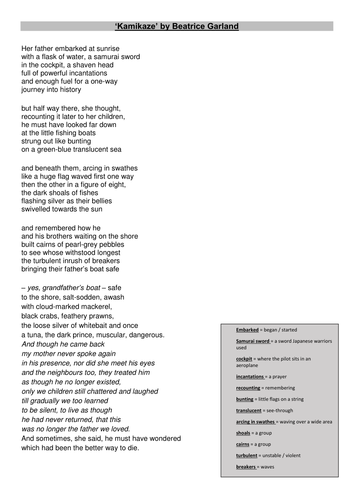
Below is a poem which tells the story of a kamikaze pilot who decides to not go through with his mission. His choice of ninjo over giri means that when he returns to Japan alive he is rejected for not fullfilling his community obligation.
Purgatory in other countries
My film will take place in purgatory which is a religious concept and therefore the representation in media will differ between Judeo-christian and Buddhist societies.
‘Festival of All Souls, held on the fifteenth day of the seventh moon to release from purgatory the souls of the deceased.’
This festival is a potential plot resolution, the thing that sets the main character free after his moral journey in limbo.
‘Their depiction of the extreme suffering of purgatory is similar to scenes in the Ten Hell paintings but is developed into a separate genre. Some extant Korean examples date from the seventeenth century. The paintings depict believers being rescued from suffering in this world or in hell in a manner that is said to be unique to Korea.’ ‘
The mention of recognisable art on this topic peaks my interest because I could put the paintings in the background of shots to foreshadow the characters future. I do more research into the Ten Kings Of Hell paintings further down.
‘In its center is a row of standing Buddhas. To the right, Amitabha, attended by Ksitigarbha and Avalokitesvara, welcomes the soul to the Pure Land while, to the left, the Illo Bodhisattva has rescued sinners on a dragon boat and led their souls to the Western Paradise. In the middle ground are two huge hungry ghosts that are biting empty bowls in their mouths,, while behind them is an offering table filled with bowls overflowing with rice and food. The foreground of the painting depicts scenes of suffering in this world and in hell. ‘
This is a description of the paintings contents. Maybe something like having the main character every now and then complain about being hungry whilst food is constantly in the background of shots with him, as a reference to the paintings.
‘The theme transforms the Indian Buddhist view of judgment after death into a typically Chinese bureaucratic process. Before being permitted to transmigrate into the next life, a soul is tried by a different king each week for seven weeks; it is sent to the eighth king on the hundredth day, to the ninth after a year, and to the tenth the third year after death.’
Survey
This is the survey that I covered the origins of in depth in my production log. After reflecting on my academic journal I realised that in order for my film to carry the East Asian ideals properly I may need to ‘write’ my film in Korean. When seeking guidance on this from a tutor I was advised to do a survey to see if people would be detoured by a foreign language film. My reasoning for each question will be written above it in blue. I excluded one reply to this survey because all of the questions were left blank.
My target audience is those who will be able to interpret the plot hints I give through symbolism thus inviting an active audience
- Yes
- Yes
- Yes
- Yes
- No
- Yes
- Yes
- Yes
- 18 to 24
- 18 to 24
- 18 to 24
- 18 to 24
- 18 to 24
- 18 to 24
- 18 to 24
- 18 to 24
- Yes I don’t understand my parents language but I watch their movies
- I have seen films in other languages, I speak another language and also as subtitles are available it is a shame to miss out on art
- yes, language shouldn’t be a barrier for good film
- Yes, martial arts films are normally better from other country’s like “raid” Also just watching a film in the intended language, makes for a better viewer experience.
- Yes because it had English subtitles and was still interesting
- I have seen a film in a different language I have seen one because o had studied Spanish
- Yes, I like anime
- Yeah,it could be interesting.
- No
- No not really
- i don’t think there is
- martial arts normally with long takes. Oldboy hallway scene (the good oldboy).
- No
- Romance or mysterious
- The foreign films I watch are mostly anime, but I do like Japanese yakuza movies
- Nope
- Everyone likes k dramas now
- No I have always been open to foreign films
- people are more open to seeing foreign films
- Mine haven’t, if it seems interesting to me I’ll watch it no matter the language, and I don’t think others around me have, either they will or they won’t still.
- Not really, I would still rather watch an English film
- Respondent skipped this question
- Nope, I’ve always been open minded to movies (as long as I hear good things about them). Train to busan was a good Korean movie
- No
- Mixed race
- White/White British
- White/White British
- White/White British
- White/White British
- White/White British
- White/White British
- Black/Black British
- £160,000 and up
- £40,000 to £59,999
- £8,000 to £19,999
- Prefer not to answer
- £20,000 to £39,999
- Prefer not to answer
- £8,000 to £19,999
- £80,000 to £99,999
Unfortunately there wasn’t much variation in age responses, which I think down to me using Instagram to distribute my survey thus automatically alienating a certain older age category. In terms of peoples response to foreign language film there is an overwhelming amount of support for a Korean film to be made for an initially English speaking audience. In terms of people wanting something specific from foreign films only 3/8 had a preference, 1 being romance and 2 being some variation on the crime genre. Only one of these weren’t an open ended answer and therefore I feel that my film will not be cutting off any potential viewers. Due to all partakers being open to foreign cinema but coming from different financial backgrounds there isn’t much to indicate an economic split when it comes to that ‘genre’ of entertainment. It does make it clear that I can count on an audience of 18 to 24s who view films actively, therefore giving me that demographic to target.
Family dynamics
In the video below Eugene and his younger sister talk about how their Korean families ideals effected them.
7:46 – 8:06 They outline that Eugene as the boy child got away with more, their parents would push leftovers from his sisters plate to his and she ended up appreciating this form of forced dieting because it kept her skinny.
11:54 – 12:06 They both agree to being very insecure with their looks
13:10 – 13:35 They mention how its ‘Asian children’s duty’ to look after their elderly parents
14:05 – 14:45 Creative children tend to feel more of a burden as it is harder to prove that they will bring their parents success
18:35 – 19:02 They feel their family dynamic hasn’t improved their life in some ways stating they’re too ‘overly ambitious’
Conclusion
There are several segments to my research but the main two are the research into myself and the research into ideas. I started this project by first looking at myself and what I want out of not only this project but my future in film making. This allowed me to narrow down genres and themes that would feature in my project and apply focus on certain areas of knowledge. From these reflection exercises I found that I wanted to centre my film around East Asian story telling techniques as I felt these we’re more abstract and called for a more active audience which is something I want to encourage with my film. I also wanted to focus on the horror genre because it has produced my favourite foreign films, particularly ‘A Tale Of Two Sisters’ which stands out to me as one of the best story structures and the cinematography is very key in the telling of key story points; it is that cinematography that really inspired me to focus on composition and angles to tell as much if not more than the script and acting possibly could.
I decided to start my idea research by looking at my current inspirations which led me to both styles and individual artists. A technique I had been looking into in my own time was animation and so that became my first point of interest. After looking into a variety of techniques like hand-drawn, computer generated and stop motion I concluded that animation would not be very time effective or efficient in the spontaneous working conditions I will be facing over the course of this project. After concluding my research into animation I turned my attention to the story aspect of my fictional short film. One of my original ideas for the film was to take a traditional folk story and put a horror twist onto it as that is the genre of interest to me career wise. The stories I read spanned 3 countries: Japan, China and Korea as they share the same homogeneous religion and therefore have a similar story structure origin that I have mentioned being interested in in my self assessment. Subsequent to reading the selection of stories I decided that I didn’t have as much substance or investment in this idea and dropped it in favor of creating my own original idea. I feel by doing this I will have more emotional investment and creative control over the project thus making my artistic voice stronger.
With the choice to write my own original story that follows the Korean story structure the next logical point of research was into Buddhism and Confucianism. I chose Buddhism because it is the homogeneous stem religion of Korea which means that Korean stories will follow structures and values that feature in the religions teachings. I also chose to look into Confucianism because it is the ideological system that has most greatly influenced East Asia and therefore it’s teachings will give incite into behaviours and beliefs of the Korean people and their media. This combination taught me about the value of family and loyalty in Korea so much so that I think I will focus my film around those 2 core values.
The final section of my research is into symbolism specific to the Korean culture so I can utilise things like colour and animals to tell an even deeper story. I feel that symbolic codes are really significant for the topic of hypnosis as it is centred around subconscious thoughts, which when presenting themselves in things like dreams can appear in a symbolic form to the host.
~~~~~~~~~~~~~~~~~~~~~~~~~~~~~~~~~~~~~~~~~~~~~~~~~~~~~~~~~~~~~~~~~~~~~~~~~~~~~~~~~~~~~~~~~~
Idea conception exercise
I did a self reflection exercise that showed me things I care about and then read between the lines of a few to find patterns and themes that could become the outline of a story, these interpretations are in red.


Old – America not joining the war till late then claiming the victory False hero
New – VR hallucinations, User created media (youtube)
Borrowed – Tale of 2 sisters director, Park Chan Wook
Blue – Water drowning
Love – BTS, food, music, fashion, hype-beast, games, water
Admire – Intelligence, confidence, talent (dance)
Hate – People, mornings, devout christians (religion), authority
Fear – Failure, pain, hierarchy
Brainstorming words
I like to write down words that come to mind when coming up with a concept to help world build. I find that my mind works by building an atmosphere and feel of an idea first and so just spit-balling vocabulary helps me find subconscious patterns that tell me what my brains unfiltered creativity thinks of a topic.
On the bottom half of the page are phrases that often circle my mind and pay on repeat. I wrote these down in an attempt to emulate the effect of free writing by getting all of these intrusive phrases onto a page and possibly provide a backbone to a character or story that reflects me and my world view accurately and intimately.

Hypnotism
Surrounded
Drowning
Psychedelic lights
Blues
Glimmer
Reflective
Shiny surfaces
He’s just a child ______
You’re not following the rules ______
You need to stop ______
I never belonged here ______
Idea outlining and brainstorming
Below is the initial idea that i had after self reflection and some theme research. It has been built on over time due to extensive research and the result of this development will be shown in the final piece.

he’s drenched the whole time
survivors guilt link kamikaze pilots
family dies in water type accident
maybe link hypnosis to injury a treatment?
Inspiration

This is the symbolism I picture potentially as part of the hypnosis process or as a ‘hallucination’ in the dream sequence portion.
25 word proposal
I condensed my first solid idea (which can be seen above) into a 25 word proposal so that i could observe the growth and the research’s influence on my final plot by comparing it to my updated proposal.
First idea
A short film which shows the dreams of a man under hypnosis using camera movement, voice over and abstract lighting techniques to create psychedelic effects.
Developed idea
A mans family dies in a crash that he survived, he then later kills himself because of survivor guilt and we follow his afterlife journey.
Official proposal
Creative Media Production & Technology
Project Proposal
| Candidate
Name |
Abbie Ellen Mole |
| Candidate Number | MOL18001183 |
| Pathway | UAL Creative media and technologies level 3 extended diploma |
| Project Title | Working title – Thriller short film |
| Section 1: Rationale (approx. 150 words) | |
| The main reason I am centering my film around East Asian themes and storytelling techniques is because I want to enter the East Asian film scene for my creative career and understanding what makes foreign cinema so different from Hollywood blockbusters will be key to my success whilst being a foreigner. The film that sparked my interest in Foreign cinema, South Korean in particular, is A tale of two sisters. This Korean thriller tells its story through camera work and color theory which prompts the audience to read the film to be able to understand where the story is heading before the reveal in the last 15 minutes. It is because of this that I decided Korean thriller was a genre that I wanted to explore for myself. Over the past few projects, I have been working on my camerawork and directing skills which are the most essential in capturing the techniques that inspire me in other films. | |
| Section 2: Project Concept (approx. 200 words) | |
| In my short film I intend to use symbolism and abstract techniques to tell a story based on themes prevalent in East Asian societies such as: ninjo and giri, toxic masculinity (the role of men in society) and attitudes towards suicide (shown through representations of the afterlife). The film starts with the main character already in purgatory after committing suicide due to survivors’ guilt stemming from losing his family in a car accident. The events that led up to his death will be portrayed to the audience via imagery, short pieces of dialogue and the ambient soundtrack. The fact that the storyline takes place before the film starts gives me the freedom to experiment with information transmission to the audience which is one of my biggest points of interest in East Asian cinema making. It also allows me to create the environment that encourages an active audience, which I think is critical to effective storytelling and makes the narrative flow more naturally. Filming will be kept to one large outdoor location not only to make shoots easier but also to encourage me too explore more camera techniques and shots to maximize how diverse one location can come across to the audience. | |
| Section 3: Evaluation (approx. 150 words) | |
| I will keep a production log to document and reflect on the process as it happens so with every piece of progress I can look back on any miss-steps and solve the problems to make the next advancement in my project even better than the last. Another form of reflection that will be featured in my production log will be peer feedback, this will be useful because it will greatly inform me of if my film has the desired effect on my audience. Also, following every piece of research I will conclude its validity and value to my creative process. Not only will I do this for individual findings, but I will write a larger conclusion which covers all areas of my research and how they work together to get me to the conclusions I made. Finally, I will write a large final evaluation addressing the strengths and weaknesses exhibited not only in my finished product, but also throughout the making process. This final look on my project will also allow me to identify skills and improvements to take forward with me into my future endeavors. | |
| Proposed Research Sources and Bibliography (Harvard Format) | |
|
|
Names research
Father – Park Yong-Seok
YONG 용, 勇 m & f Chinese, Korean
From Chinese 勇 (yǒng) meaning “brave” or 永 (yǒng) meaning “perpetual, eternal”. This can also be a single-character Korean name, for example from the hanja 勇 meaning “brave”. This name can be formed by other characters besides those listed here.
SEOK 석, 石, 錫 m Korean
From Sino-Korean 石 (seok) meaning “stone” or 錫 (seok) meaning “tin”, as well as other characters that are pronounced the same way.
Mother – Park Eun-Jeong
EUN-JEONG 은정, 恩廷, 恩婷, 慇婷 f Korean
From Sino-Korean 恩 (eun) meaning “kindness, mercy, charity” or 慇 (eun) meaning “careful, anxious, attentive” combined with 廷 (jeong) meaning “court” or 婷 (jeong) meaning “pretty, graceful”. This name can be formed by other hanja character combinations as well.
Son – Park Seung-Jun
SEUNG 승, 昇, 勝, 承 m & f Korean
From Sino-Korean 昇 (seung) meaning “rise, ascent”, 勝 (seung) meaning “victory, excel” or 承 (seung) meaning “inherit”, as well as other characters that are pronounced similarly.
JUN (1) 준, 俊 m & f Chinese, Korean
From Chinese 君 (jūn) meaning “king, ruler”, 俊 (jùn) meaning “talented, handsome” (which is usually only masculine) or 军 (jūn) meaning “army” (also usually only masculine). This is also a single-character Korean name, often from the hanja 俊 meaning “talented, handsome”. This name can be formed by other characters besides those shown here.
Daughter – Park Jeong-Hui
JEONG-HUI 정희, 正姬, 靜姬, 正熙 f & m Korean
From Sino-Korean 正 (jeong) meaning “right, proper, correct” or 靜 (jeong) meaning “quiet, still, gentle” combined with 姬 (hui) meaning “beauty” or 熙 (hui) meaning “bright, splendid, glorious”. Other combinations of hanja characters can form this name as well.
PARK (1) 박, 樸, 朴 Korean
From Sino-Korean 樸, 朴 (bak) meaning “plain, unadorned, simple”.
Character maps


Inspiration
I would like to combine these two concepts and track into the characters face in a way inspired by the babadook and then have it zoom out to appear in another location or, zoom into the person face straight on then rotate following the curve of their face horizontally till the background is revealed to be different behind the side profile of their face.
/cdn.vox-cdn.com/uploads/chorus_image/image/61392229/jpeg.0.1488843496.0.jpeg)
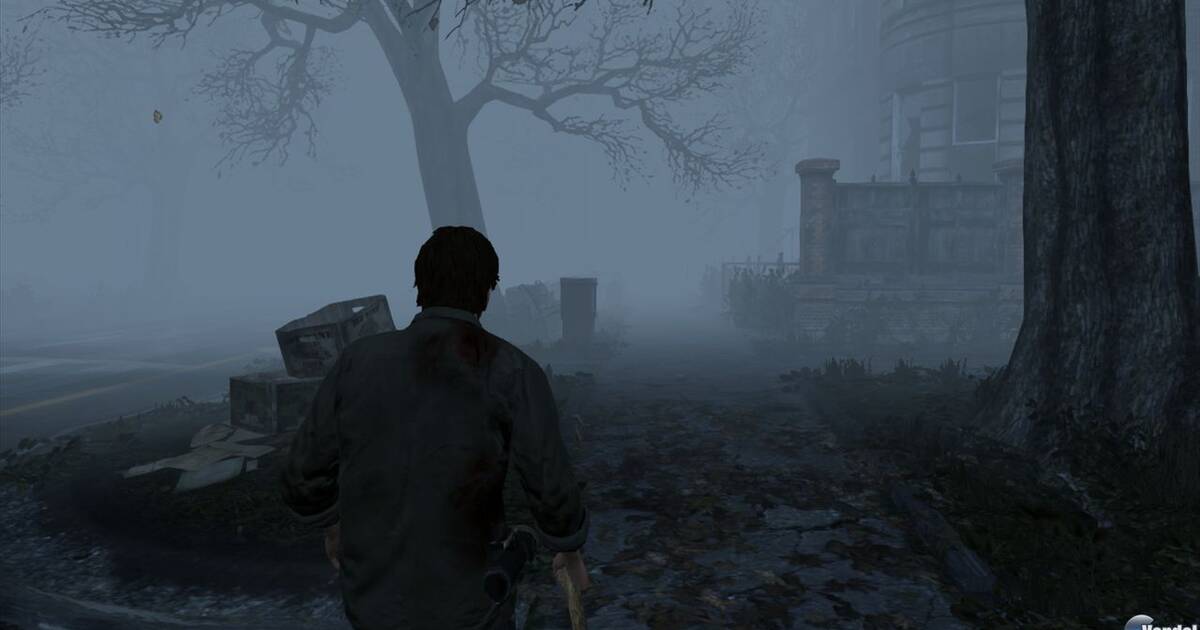

Silent Hill: downpour promo material
Silent Hill: shattered memories is a game that follows a dad who is in limbo and has to re-find memories of his daughter to find out what led to their demise.
Test shots
The first clip is one i took when i was inspired by how the water looked. I did a tracking shot into the water like what i envisioned with my first idea that centred around water. The other clips were taken on the way home from a university open day. The periodic darkness pierced by moving street lights combined with the drivers identity being obscured really inspired me to recreate something similar for any driving flashbacks.
Whilst walking my dogs I got inspired by how the lights were acting with the trees. I put all the videos together using my basic laptop editor at home due to the pandemic. I visualised my film in a wooded area and I also wanted to focus on using light for thriller mise-en-scene so this location really inspired me. I did a few movement shots that revolved around the moon and it piercing through the darkness. The contrast reminded me of my idea where the headlights of the ‘vehicle’ hallucination shine through the woods as 2 bright inconspicuous circles.


The first picture is another example of the headlight mimicking I mentioned above. The other 2 are more based on atmosphere and mise-en-scene of the forest setting.
 Abbie's media projects